Free Guides And Articles To Help You Build The Modern Fit Physique
Learn the important training, nutrition, and lifestyle principles and strategies that are crucial for building the Modern Fit Physique.
How To Build Muscle: A Complete Guide Building Muscle.
What Is This Guide And Who Is For?
This guide takes a deep dive into the fundamental principles of building muscle. Understanding and applying these principles will help you understand if your current training is likely to be effective for building muscle. Without understanding, and more importantly, applying key training, nutrition, and lifestyle principles consistently over time, you run the risk of severely limiting the results you are likely to achieve.
This guide will be of most use to beginners and early intermediate lifters who need to learn and apply the basics, rather than focusing on things that are of lesser importance. Understanding these fundamental principles will get you 90 percent or more of the results you are likely to achieve. Towards the end of this guide, we will show you how we use these principles in our overall fitness philosophy and for building the Modern Fit Physique.
Cutting Through The Confusion
We now have access to more information than at any other time. Fitness content is easily accessible to all, and social media influencers have hundreds of thousands or even millions of followers. This can be a double-edged sword, especially for beginners who are just starting their fitness journey. There is undoubtedly good information out there, and much of it is free. There is also bad information out there. You could even class some of this content as misleading and some of the paid content outright scams. Influencers who sell poorly designed and ineffective programs which promise unrealistic and even unattainable outcomes for many.
An individual coming across good information and following the right people can make fantastic progress, and the information they learn can set them up well for their fitness journey ahead. An individual coming across poor information can end up wasting months or even years following poor advice or focusing on the things that are of lesser importance. Worst of all, this may lead to them giving up on their fitness journey before it has even begun due to lack of progress and results.
After decades of experience from coaches around the world as well as research on the mechanisms behind building muscle, we now have a pretty good understanding of what it takes to build muscle. Some of these mechanisms are not fully understood at this time; however, the big picture fundamentals are understood. We know that if these principles are applied consistently, the outcome is muscle growth. Understanding and applying the fundamentals will result in 90% or more of the muscle growth an individual is likely to build over their lifetime.
Basic Lifting Terminology

Before we get started, here is some basic exercise terminology, specific to strength training. It is important you understand these terms as they are the variables that make up a training program.
Repetitions (reps)
Repetitions is the number of times you lift or move a weight on a machine. One repetition would be the lifting part of the movement, also known as the concentric phase of the lift, as well as the lowering part of the movement, which is known as the eccentric phase of the lift. For example, squatting down and then standing up again when performing a squat pattern would be 1 repetition or rep.
Sets
A set is a number of repetitions performed back-to-back, before stopping a set because you have reached a desired number of reps or you are too fatigued to complete any more reps. For example, if you performed 10 repetitions of a squat and then stopped, that would be 1 set. We typically perform multiple sets of a particular exercise, although this is not always the case.
Volume
Volume or training volume can be thought of as the amount of work we do in a particular training session or over a period of time, usually one week. In terms of training to build muscle, we will be defining volume as the number of sets you perform over the week for each muscle group.
Intensity
Intensity refers to the proximity of a set to muscular failure. For example, if we complete a set without being able to perform another repetition, it would be considered a higher intensity set compared to if we had stopped the set one or two repetitions earlier. Intensity can also be defined by the amount of weight lifted. For example, a 5-rep set working to muscular failure would be considered a higher intensity set than a 10-rep set working close to muscular failure. We will be defining intensity as proximity to muscular failure, as this is most useful when we are performing hypertrophy-specific training (training to maximise muscle growth).
Frequency
Frequency is the number of times you train or work a muscle group per week. It is not the number of times you train or use the gym each week. For example, if you followed a classic 4-day upper body, lower body split, the training frequency is twice per week for all major muscle groups because you are performing 2 upper body days and 2 lower body days over the course of one week.
Repetitions In Reserve (RIR)
Repetitions in reserve (RIR) is a scale used to measure the intensity of a set. It is the number of repetitions you are able to complete before you reach muscular failure. The point at which you are unable to move a weight due to muscular fatigue. RIR can therefore be used to define the intensity of a set we are performing.
Training To Build Muscle Vs Training For Strength
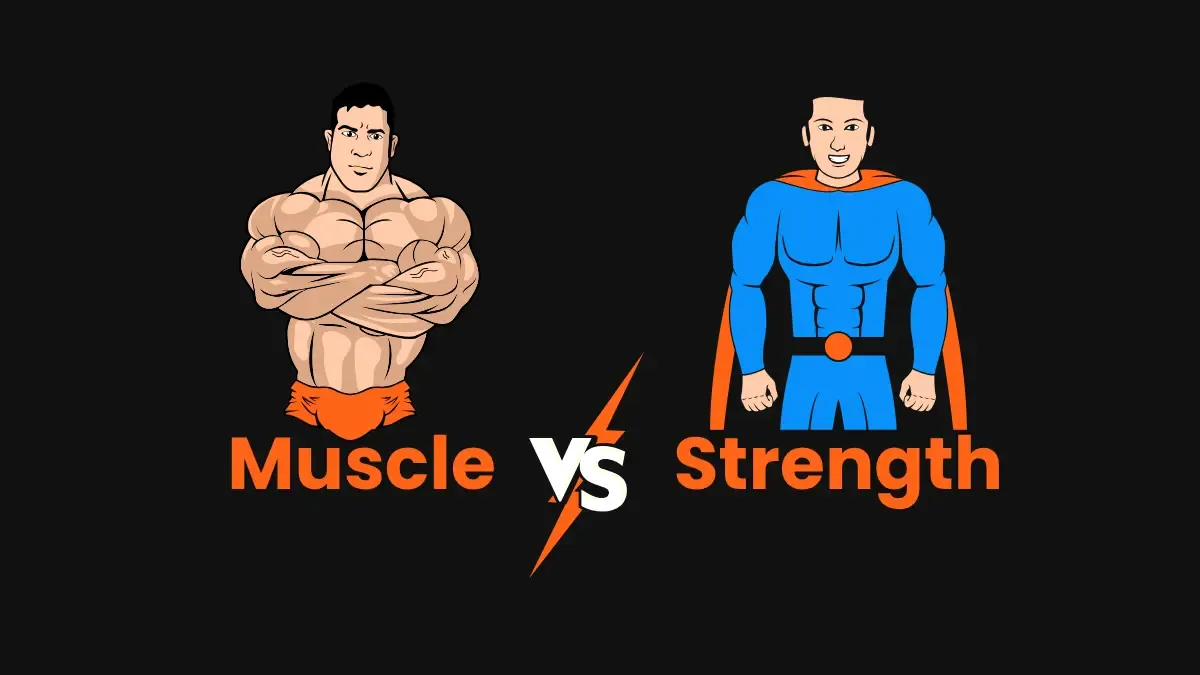
Although the size and strength of a muscle are highly correlated, we can train to either maximise muscle growth (hypertrophy) or strength. A key difference between training to build muscle and training to maximise strength is the number of repetitions we perform in a set as well as the frequency we perform a specific exercise throughout the week. Pure strength training involves using lower repetition ranges, typically between 1-5 reps, although higher repetition ranges can also be used. Because fewer repetitions are performed, the weight is heavier. Training for strength involves practising a specific exercise more often, training the nervous system to lift heavier weights while using efficient technique to move the weight.
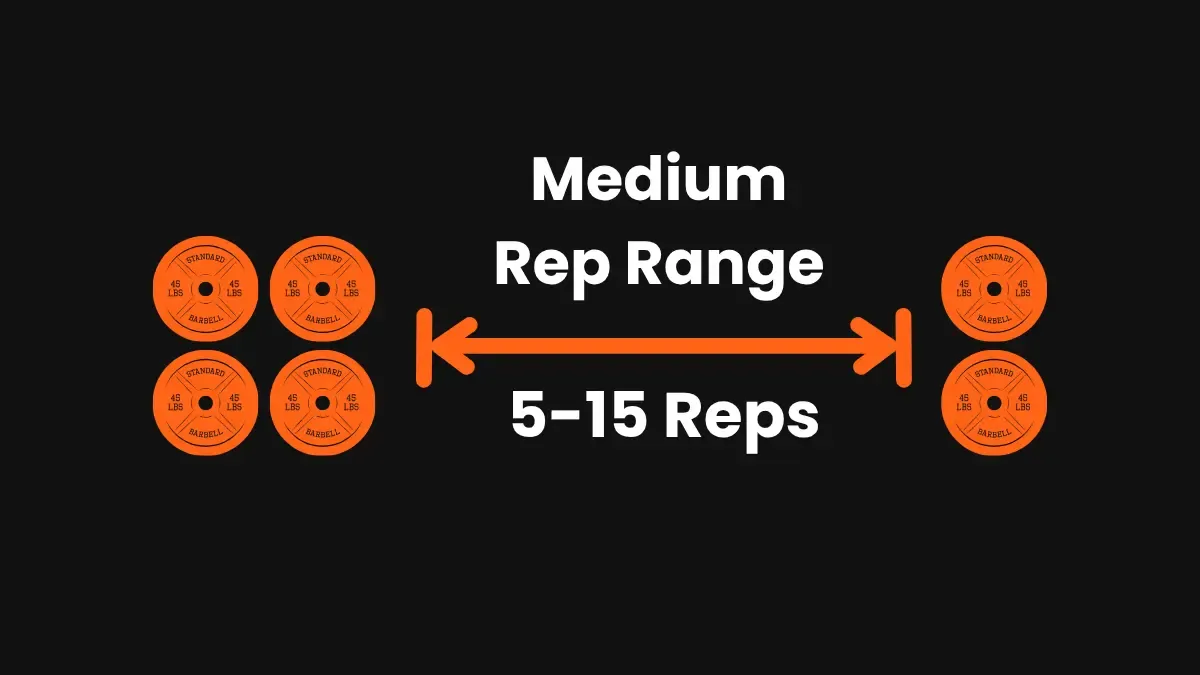
When training to build muscle, we are still focusing on strength progression; however, we are mostly aiming to gain strength in a medium repetition range, typically between 5 and 15 reps, although performing some lower repetition sets below 5 and some higher repetition sets above 15 can also be used. Performing the majority of sets in a medium repetition range allows for the accumulation of training volume, which is important for hypertrophy. It is also more practical in terms of how long our training sessions are, as well as the effect on things such as joint and connective tissue health.
Pure strength training is more specific compared to hypertrophy training, meaning we need to perform a specific movement often to get strong at it. We will also lose strength quicker if we stop performing a specific exercise as the nervous system becomes less efficient at performing that specific exercise. Hypertrophy training is less specific, meaning we can use more variety in the exercises we are performing, and we can perform specific exercises less frequently as strength is not the primary goal. We will still get stronger as we build more muscle in a medium repetition range over time.
Progressive Overload
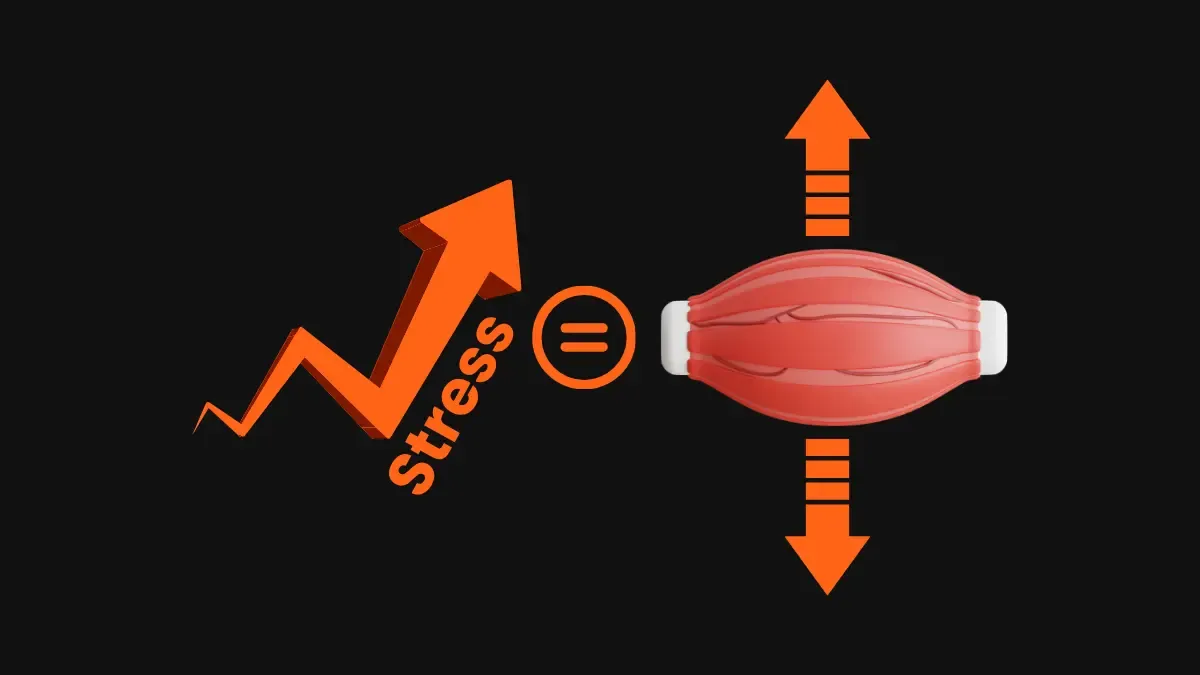
Progressive overload is a principle in strength training that, as the name suggests, involves making your training progressively more challenging over time. In the case of building muscle, this means gradually increasing the stress or stimulus we place on a muscle group so that it is forced to adapt and become stronger. To do this, the muscle will increase in size (hypertrophy). Although there are a number of different ways to implement progressive overload, the two main ways we achieve this when the goal is building muscle are to increase weight lifted and increase the number of repetitions performed at a given weight.
Progressive overload is often described as adding weight or trying to perform an extra rep from your previous workout. Although this should be the goal, there may be a better way to think about progressive overload. Being able to lift more weight or perform an extra rep is the result of effective training in a previous session or sessions. The stimulus you placed on the muscle group the last time you trained it, working at a close proximity to muscular failure, forced your muscles to adapt, allowing you to increase weight or perform an extra rep in your current training session.
This can be a useful way to think about hypertrophy training. You will not always be able to increase weight or add an extra rep on an exercise each week. A trap many people fall into is believing they need to add weight or perform more reps each session to ensure progressive overload is achieved. This can often result in changes to exercise form just so they can gain that extra rep they believe is necessary for an effective training session. As long as you are performing your sets at the correct intensity, a set will still be stimulating for hypertrophy even if you repeated the same weight and reps from the previous workout.
Over the weeks, this will result in an adaptation, allowing you to get that extra rep or add weight, which is an indication progressive overload is being achieved, even though it may have seemed like you did not progress on some exercises every week. This can take some of the stress out of believing you need to add weight and reps every single week to progress. A simple example of progressive overload in action is using the double progression method, which we will cover later in this guide.
Volume Intensity And Frequency
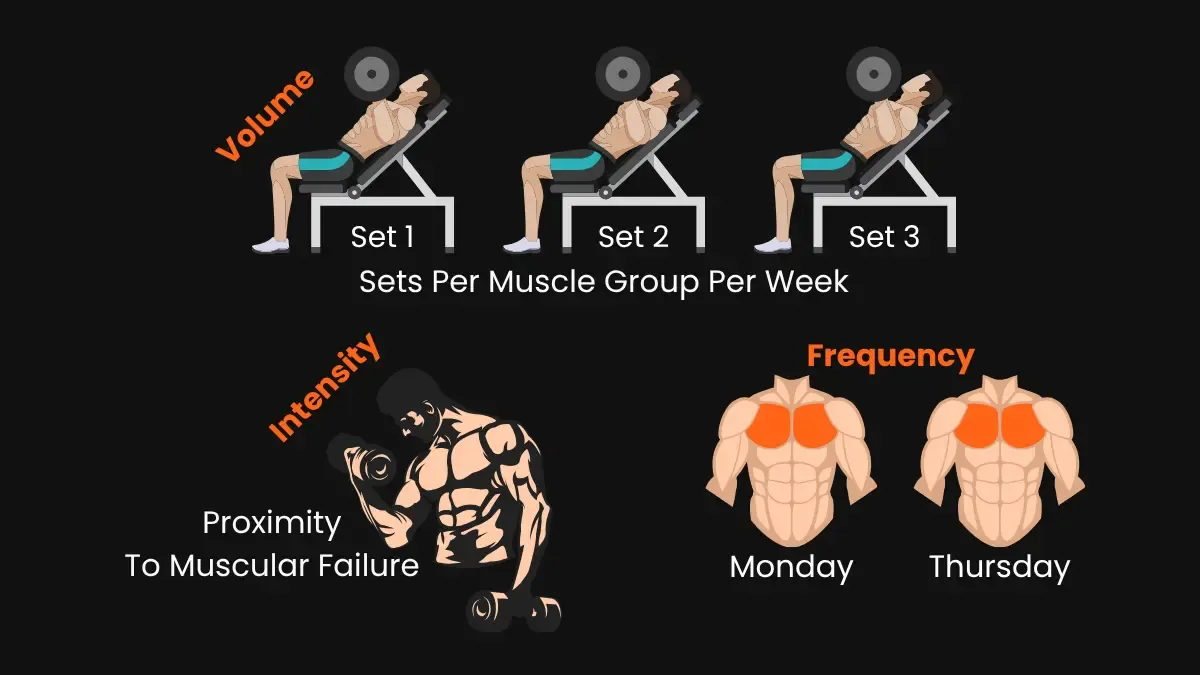
Volume, Intensity, and frequency are 3 principles used in strength training. These 3 variables are used to design training programs, whether the goal is building muscle (hypertrophy) or more strength-based. Having a basic understanding of these important principles will help you better understand how to build muscle effectively and whether your current training program is set up well.
Volume
When our main goal is building muscle, a simple and effective way to quantify training volume is to count the number of working sets performed for a muscle group throughout the week. This way, we can quantify the amount of stress we are placing on a muscle group and can then make adjustments based on our current progress and goals. A commonly stated volume recommendation based on research is 10-20 sets per muscle group per week. This can be a useful recommendation, although using the lower end of this volume range will be effective and will be more appropriate for the vast majority of individuals.
Training volume is also influenced by the intensity of the sets you perform. If you work closer to muscular failure, you will need to perform fewer sets, and if you are working further away from muscular failure, you may need to perform more sets. This is where much of the confusion about training volume comes from in terms of which is best, high volume or low volume training. Both approaches can work.
Most coaches working with real people in the real world find a lower to moderate volume approach is best. Training volume should be based on the individual, as there are many factors that affect the amount of volume an individual can perform and, more importantly, recover from. Things such as age, training age, stress levels, personality type, and even genetics should be taken into account. We should also make the distinction between the general population client who just wants to build some muscle to look and feel better and individuals who are more serious, such as those who compete in physique sports such as bodybuilding.
A useful way to think about training volume is to perform the minimal amount of volume you need to progress on. If you can progress on fewer sets, there is no need to do more as this will only impact recovery for minimal or no extra benefit. Adding extra sets only when you need to is a smart strategy. You will likely need to perform different amounts of volume at different times in your lifting career, depending on goals. We find the sweet spot for most people is around 8-14 sets per week for each muscle group. This would be considered a moderate training volume.
Intensity
For hypertrophy training, the best way to define intensity is the proximity to muscular failure we take a set to. This simply means how close we take a set to the point where we are unable to move a weight any further due to the target muscle fatiguing. This is important because a set needs to be performed at a high enough intensity to be stimulative for hypertrophy or muscle growth. If we stop a set too soon, the set will be minimally effective or not effective at all for building muscle.
A useful way to quantify the intensity of a set is to use the reps in reserve scale (RIR). We recommend taking your sets to a 0-2 RIR with a 0 RIR being used for most exercises if safe. This is not a failure set, it is the rep before you reach failure. In simple terms, you are just able to complete the rep but would fail the next rep if you attempted it. This will depend on the type of exercise you are performing as well as the equipment you are using and your training age. Beginners will be less accurate at determining how close to muscular failure they are when performing a set, while more experienced lifters will be more accurate.
Diet breaks are planned or auto-regulated periods within a fat loss phase, where calories are raised to around maintenance, usually from carbohydrates.
Physiological benefits of diet breaks include the reduction of fatigue and the replenishment of muscle glycogen which can help performance in high-intensity activities such as strength training.
Diet breaks can provide a mental break from the monotony of dieting, which may help with dietary adherence, and can therefore help an individual achieve their fat loss goals.
Leaner individuals, who have been dieting for longer, and are consuming fewer calories will likely benefit more from diet breaks.
Individuals who have more body fat to lose may also benefit from diet breaks, by breaking a fat loss phase into deficit and maintenance blocks, although this is not always necessary and will depend on the individual.
Frequency
Frequency is the number of times we train or work a muscle group per week. Research shows that training a muscle group twice per week is a highly effective training frequency for hypertrophy (building muscle). For most individuals, a muscle group will be fully recovered at around the 48-72 hour mark, so it makes sense to train that muscle group again at this point, rather than waiting any longer. This is a general recommendation and will be dependent on the amount of in-session volume performed as well as the level of advancement of the lifter.
For example, more advanced lifters, lifting more weight, may need longer for a muscle group to recover. In simple terms, they are able to place more stress on the target muscle group, and in doing so, they are able to get more out of each set due to the amount of weight they are lifting as well as their execution of the lift. At the other end of the spectrum, beginners can easily recover within 24 hours and can train a muscle group or movement pattern more frequently. This can be helpful because it gives them more frequent practice for a movement pattern or exercise.
Frequency will also be determined somewhat by the amount of volume (sets per muscle group per week) you are performing. If you need to perform 10 sets per week, it is better to split this volume up rather than performing it all in one session. Performing 5 sets on one day and then performing 5 sets 2-3 days later will allow your sets to be higher quality. You will be able to perform more reps over the session, and your intensity will likely be better. This is why certain popular training splits work so well and have stood the test of time.
Volume, Intensity, And Frequency Guidelines For Hypertrophy
Perform 8-14 sets per muscle group per week. Start at the lower end of the range and only increase when you need to. Beginners can likely make progress on less, 5-6 sets per week.
1-2 RIR for compound barbell lifts such as the squat, deadlift, bench press, overhead press.
0-1 RIR for other compound lifts using dumbbells and machines.
0 RIR for isolation exercises. You can also train to failure on some of your isolation exercises although this is not necessary all of the time.
Train a muscle group 2-3 times per week.
In session training volume (sets per muscle group per session) should also be taken into consideration. Use training frequency to distribute your weekly volume. 4-6 sets per muscle group per session is a good general recommendation, although this can be slightly higher or lower depending on your training split and level of advancement.
Repetition Ranges
Muscle can be built using a fairly wide range of repetition ranges. This is well known by coaches and is also supported by the latest research. The main factor behind whether a set is stimulative for hypertrophy is the proximity to muscular failure it is taken to, as mentioned previously. Heavier sets using lower reps can be stimulative for hypertrophy when staying a little further away from muscular failure. A set of 4-6 reps performed at a 1-2 RIR will still be an effective set since full muscle fibre recruitment is required even from the first repetition. Lighter sets using less weight will need to be taken closer to muscular failure to be maximally stimulative for hypertrophy.
The sweet spot for hypertrophy is the medium repetition range, around 5-15 reps. This repetition range allows sets to be performed at a high level of intensity without accumulating excessive fatigue, and the sets are also long enough in duration to be stimulative for hypertrophy. It is also beneficial for joint and connective tissue health, compared to performing multiple sets with heavier weights throughout the week. This repetition range is also practical to use in the real world, from a time efficiency standpoint. We can get a sufficient amount of work done in a short amount of time.
You can perform some sets lower than 5 reps and some higher than 15; however, it is a good idea to perform the majority of your sets in the 5 to 15 repetition range. Higher repetition ranges, such as 20 and above, can be effective; however, they are extremely challenging to perform both physically and physiologically. This is because the sets need to be performed much closer to muscular failure. They are also harder to recover from and will cause more soreness, which can affect when you are able to train that muscle group again. This is especially true for lower body training.
The exercise you are performing will also dictate the repetition range you use to some degree. Some exercises are more appropriate for certain repetition ranges, and some may simply feel better in a certain repetition range. The equipment you are using can also make some repetition ranges more or less appropriate, for example, using free weights vs machines. Personal preference and enjoyment should also be taken into consideration. If you enjoy performing an exercise in a certain repetition range, you will likely get more out of it.
Repetition Guidelines For Building Muscle
Here are some useful guidelines for repetition ranges. Performing the majority of sets in these ranges works great for most people, although these are not set-in-stone recommendations.
Compound Free Weight Exercises: 5-8 reps.
Compound Machine Exercises: 5-15 reps.
Isolation Exercises: 8-15 reps.
The Key To Muscle Growth
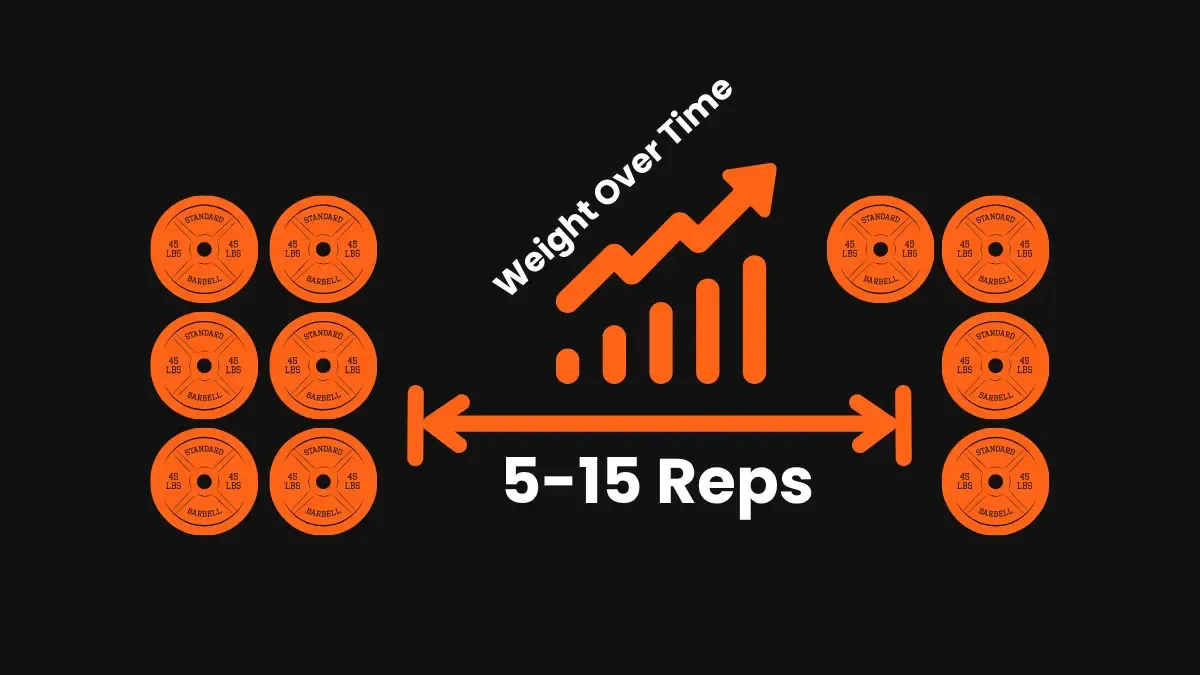
One simple way to think about training to build muscle is the following sentence:
Progressive Poundages In The Medium Repetition Range Is The Key To Building Muscle.
I did not come up with this sentence; the credit goes to Fazlifts for this. This one sentence simplifies the process of building muscle. If you are lifting more weight over time, working in a medium repetition range, around 5-15 reps, you will have built muscle.
Of course, this is easier said than done, and the more advanced your goals are, the more difficult things become. Things such as volume, intensity, and frequency, and how you manipulate these over time, are the levers we pull to allow this to happen. Other factors such as eating enough, the overall quality of our diet, and our recovery are also important. Consistency and patience are also key. Building muscle is a long-term game.
Exercise Selection
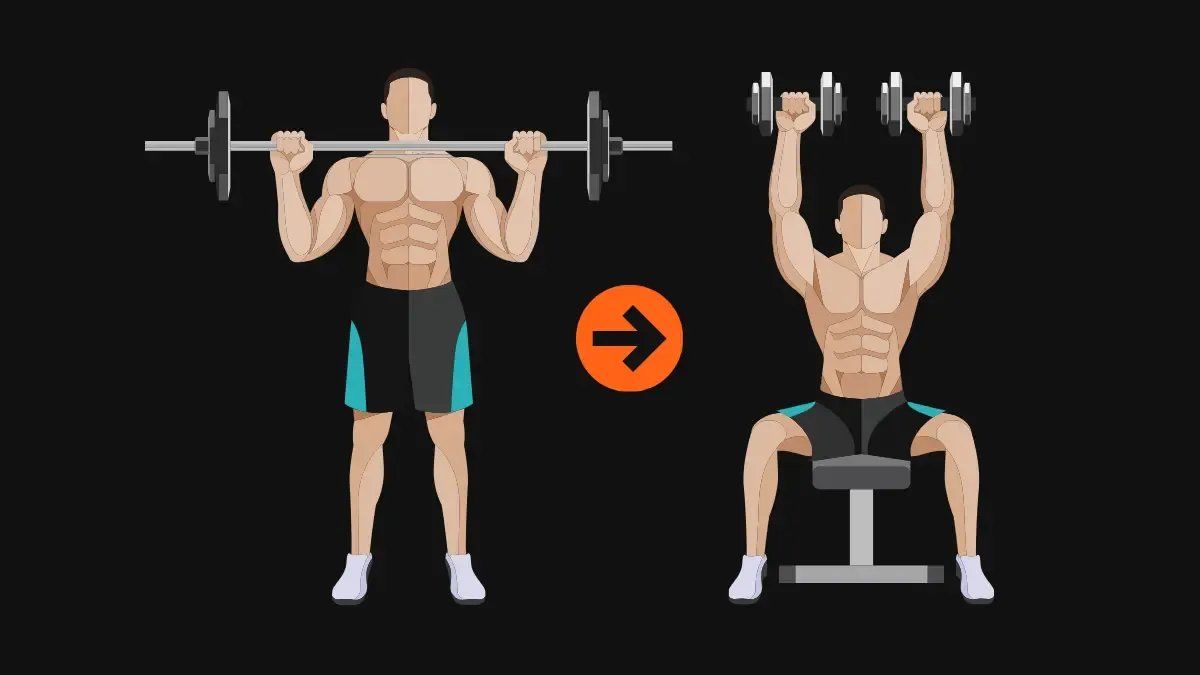
One key factor in building muscle is exercise selection. Choosing the most effective exercises for each muscle group, and choosing the ones which fit your unique body structure and work well for you is vital. The best exercises for hypertrophy need to train the target muscle effectively, without causing any joint discomfort or pain. Since building muscle is a long-term game, they should be able to be loaded incrementally for years. If we cannot continue to load an exercise long-term, then we cannot progressively overload a muscle group.
Hitting The Target Muscle
Training the muscle group we are trying to grow is crucial. We need to place as much tension on the target muscle as possible, rather than feeling it on the joints or supporting muscle groups we are not targeting. The muscle group we are targeting should be the limiting factor. This means when we are performing the exercise, the target muscle group is the one that fatigues as we get closer to muscular failure, rather than a supporting muscle group failing before the muscle we are trying to target is fatigued, resulting in the set having to be terminated.
Compound Exercises
Compound lifts or multi-joint exercises are the foundation of any good hypertrophy program. Compound exercises train multiple muscle groups at the same time, which means we can lift more weight, therefore placing more tension on a muscle group. They can also be loaded safely and for a long time. There is also a significant hormonal response by the body when performing heavy compound exercises, which can assist in building muscle as well as hormonal health, such as increasing or maintaining healthy testosterone levels.
Isolation Exercises
Isolation exercises or single-joint exercises are useful when the goal is building muscle, although they should not make up the majority of the exercises you perform. As the name suggests, isolation exercises allow us to isolate single muscle groups. Since they are not as fatiguing and do not cause as much systemic fatigue as heavy compound lifts, we can perform more volume without impacting our recovery. Compound exercises will not target specific smaller muscle groups as well as isolation exercises since the larger muscle group will perform more of the work, even though smaller muscle groups will assist in the movement. Adding isolation exercises to complement compound lifts is crucial when training to maximise muscle growth.
Free weights Vs Machines
When our goal is hypertrophy, variety is key, and this involves using a combination of free weights and machines. Beginners should focus on learning compound free weight exercises using barbells and dumbbells, as well as bodyweight exercises. Movement patterns such as the squat, hip hinge, horizontal push and pull, vertical push and pull, and lunge pattern are important to learn, as these movement patterns will be the foundation of your training moving forward.
Machines can also be used, although they should not be the focus for a beginner. Machines are more useful as an individual becomes more advanced, as they allow for more variation and can allow us to work closer to muscular failure, safely. Another benefit of machines is that they are not as fatiguing, which allows for more volume to be performed when needed in combination with free-weight exercises. They are also great to use with intensity techniques such as mayo reps and drop sets, as the intensity can remain high and the likelihood of form breakdown is lower compared to using free weights.
Exercise Form
Range Of Motion
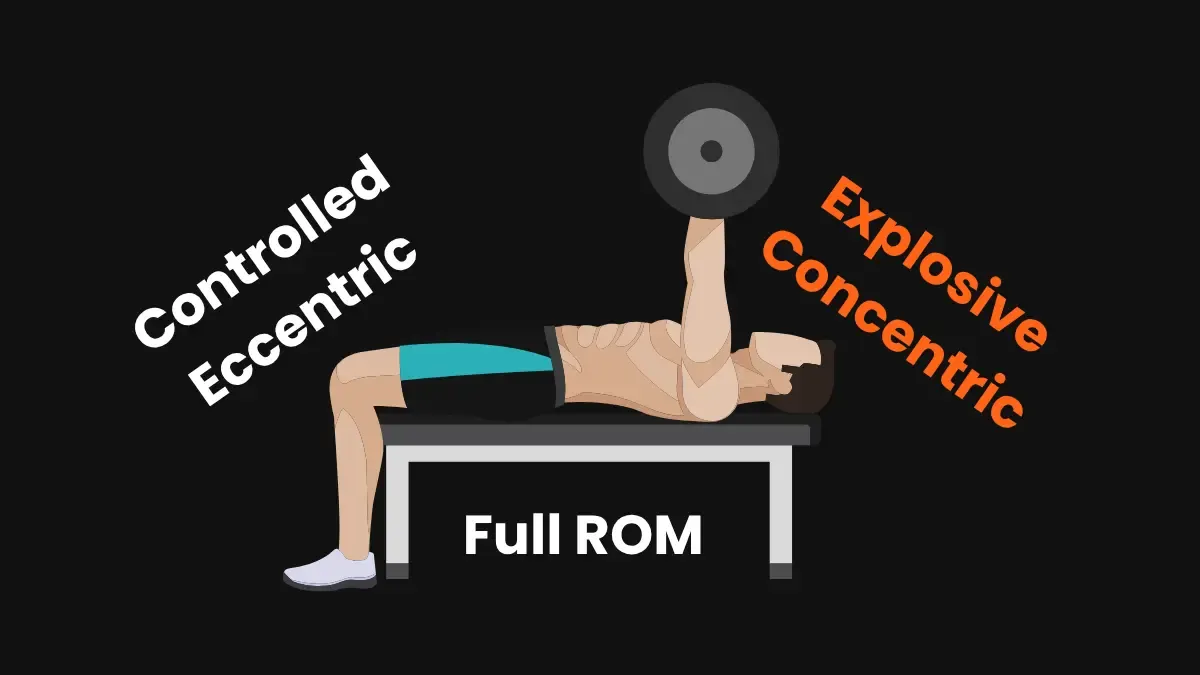
When performing an exercise, you should use a full range of motion. Working the target muscle group through a full range of motion is generally more effective for hypertrophy, especially if the target muscle is under tension in the stretched position. It can also increase and maintain flexibility and is beneficial to joint health. It is important that you work to your current mobility level to reduce any potential risk of injury. You can then work on improving any limitations you may have over time.
Lifting The Weight
The concentric phase (lifting) part of an exercise can be performed explosively. We recommend having the intent to move the weight as quickly as possible, even though the actual speed will likely be slow to moderate depending on the weight you are using. Another way to think about the lifting phase of a lift is effort. Lift the weight with 100% effort, even as you are fatiguing and your reps are slowing down.
Lowering The Weight
The eccentric phase (lowering) part of an exercise should be controlled. We recommend anywhere from 1-3 seconds depending on the exercise you are performing. Lowering the weight much longer than 3 seconds is unnecessary and can even be counterproductive, as this will limit the number of reps you can perform for a given weight. A controlled descent is also safer and can help prevent injury. If you are learning an exercise, you may want to use a slightly longer descent initially, as this can allow you to control the weight better and can improve technique.
The Transition
The transition between the eccentric phase (lowering) and the concentric phase (lifting) of an exercise can be instantaneous. We do recommend a slight slowing down of the eccentric phase (lowering) before moving into the concentric phase (lifting) on most exercises, as this can help prevent injury, especially when using heavier weights. For example, when performing a barbell bench press, you may lower the bar to your chest for 2 seconds, slowing the speed of the bar just slightly as you touch your chest, before squeezing the bar of your chest. As soon as the direction is reversed, you can move the bar explosively again. You can also pause for a split second.
Rest Periods
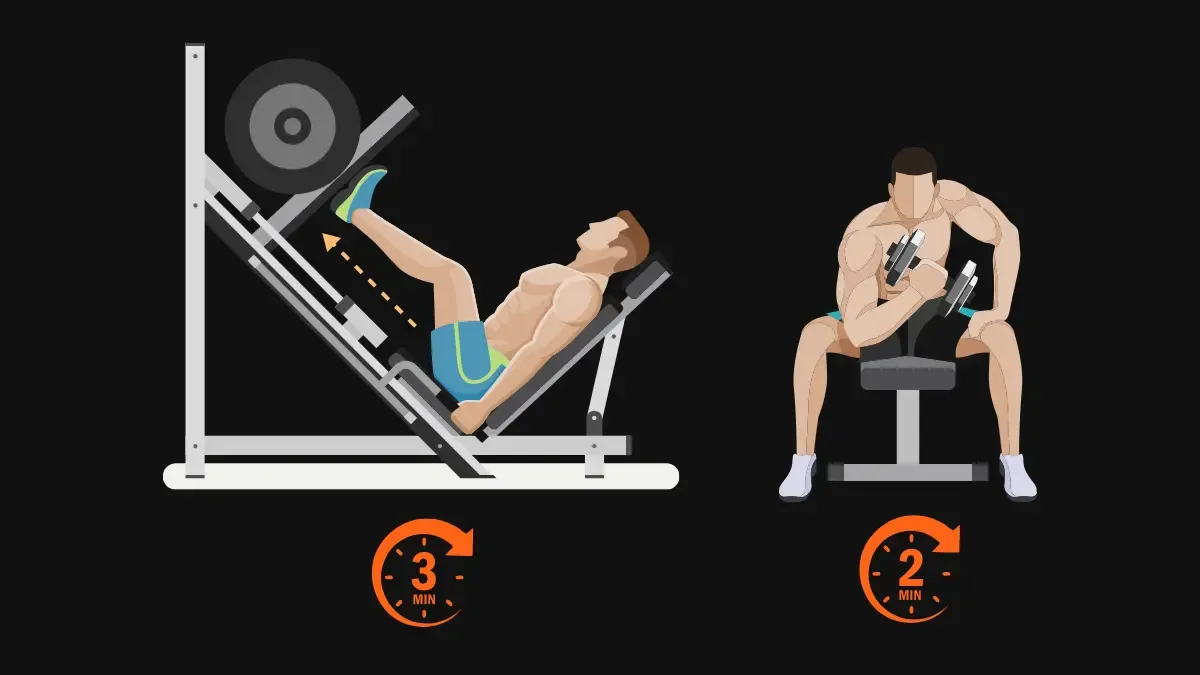
Resting sufficient time between sets for the same muscle group is important because it allows for adequate recovery and ensures the next set will be a high-quality set which is maximally stimulative for hypertrophy. If we do not rest long enough between sets, the number of repetitions we can perform in the following sets will be reduced too much, affecting the amount of volume we can accumulate. Overtime, this may be detrimental for hypertrophy as we will be performing less work and therefore placing less stress on a muscle group in our training sessions.
When performing multiple sets of an exercise for the same muscle group, a drop in the number of repetitions you can perform in each set is normal. This means your previous set was performed at an adequate level of intensity to be stimulative for hypertrophy. The muscle is fatigued, resulting in you being able to perform fewer reps on the subsequent set. Loosing 1-2 reps from the previous set is normal, and it may even be 3 on certain exercises, especially if you are past the beginner stage and are fairly strong. Loosing 3 or more reps on all of your exercises consistently could be a sign you are not resting long enough.
A typical rep drop of over multiple sets may look something like the following:
Set 1: 80kg x 9 reps
Set 2: 80kg x 8 reps
Set 3: 80kg x 6 reps
As far as rest times are concerned, you have two options. Some people prefer to time their rest periods to ensure they are resting the same amount of time between sets and the same amount of time they were in their last training session. The benefit of this is that we are removing a variable, meaning that if we performed an extra repetition this week from the previous week, we did so because we got stronger, rather than we rested a little longer than last time.
Another option is to simply perform your next set when you feel you are ready. This is probably best used by more experienced lifters who know their bodies and know when they are ready to perform their next set. As long as there is not a large drop in the number of repetitions they performed compared to the previous set, they have rested long enough.
Here are some general guidelines for rest times:
Compound exercises of 5-8 reps: 3 mins
Compound exercises of 8+ reps: 2-3 mins
Compound exercises of 15+ reps: 2 mins
Isolation exercises of 5-8 reps 2-3 mins
Isolation exercises of 8+ reps 1-2 mins
Training As A Beginner Vs An Intermediate Lifter And Beyond
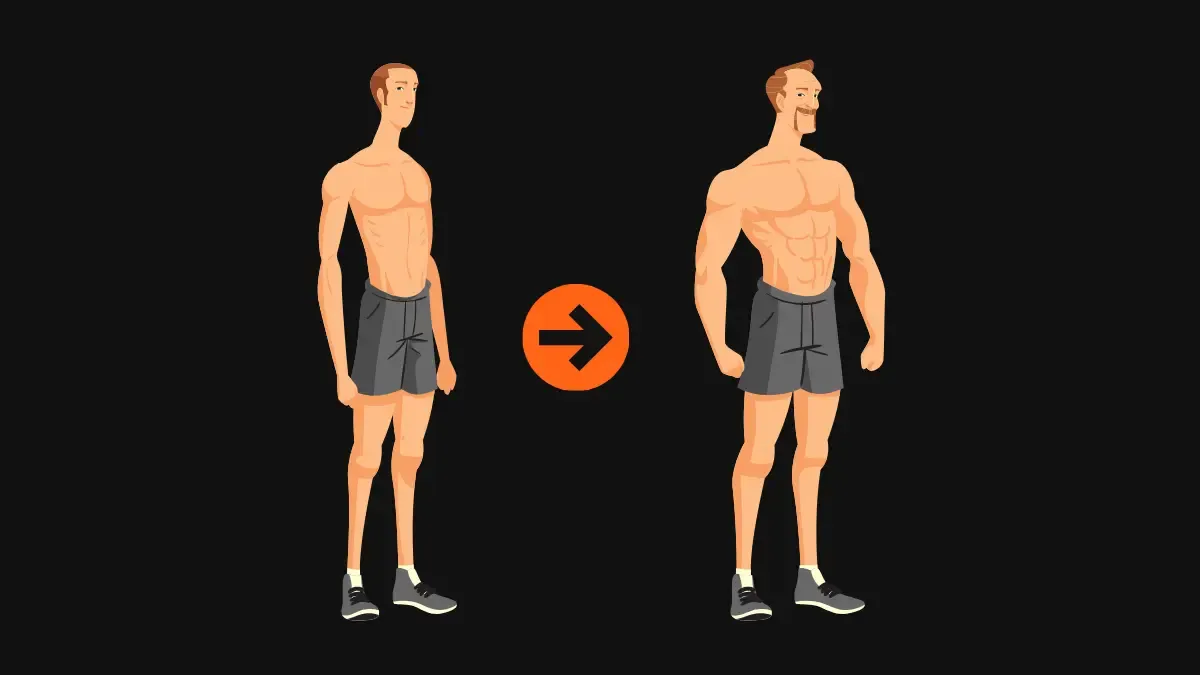
As a beginner, it is fairly easy to make progress as long as your training is set up at least somewhat sensibly, and your exercise selection and form are at least okay. It will not be perfect at this stage. As long as you are getting some stimulus on the muscle you are trying to target and you are working at an adequate intensity, you should be able to add repetitions or weight onto an exercise on a session-by-session basis. This is because a beginner is untrained and the novelty of beginning to lift weights sends a strong stimulus for the body to adapt.
Much of the initial progress made by beginners is also neurological, the nervous system learning to be more efficient when performing an exercise and adapting to send a stronger signal to the muscles to contract. Beginners can and probably should stay a little further away from muscular failure when they perform their sets. Using a 1-3 RIR depending on the exercise is recommended. This is because there is a greater risk of form breakdown when beginners push their sets closer to muscular failure, and it is important for beginners to focus on technique and learn good form from the beginning.
As a beginner is getting that novel stimulus, the intensity of their sets can be a little lower, and they are still getting enough of a stimulus to ensure progressive overload is achieved. Intermediate lifters will need to perform their sets closer to muscular failure to ensure they are maximally stimulative for hypertrophy.
Beginner training in general should be simple. As long as a beginner is doing most things right most of the time, they will make good progress. As they move past the beginner stage into the early intermediate, intermediate, and beyond, training complexity will need to increase if they are looking to maximise their results. As an intermediate, the fundamentals will still produce 80% of a lifter’s results; however, smaller details will likely matter more, and customising a training program to the individual is more important.
As far as training volume is concerned, there appears to be a general pattern for what is required to build muscle at different stages of progression. As a beginner, almost any training volume will work because they are in an untrained state and highly receptive to any training stimulus. As a lifter transitions from the beginner stage to the early intermediate stage, they may need to increase their training volume to maximise progress. Similarly, an intermediate lifter will often need to increase training volume once more to progress from the intermediate stage to the late intermediate stage as they approach the advanced stage.
The intermediate stage might be the time when a lifter uses the highest training volume in their entire lifting journey. As a lifter progresses to the advanced stage, their volume tends to decrease. This is because advanced lifters possess greater strength, better technique, and the ability to get more from each set. They can generate sufficient stimulus to stimulate growth even with fewer sets. Additionally, as they lift heavier weights, they require more recovery. If they were to continue to perform the same number of sets as they did in their intermediate stage, they may run into recovery issues, as well as joint and connective tissue problems.
Training Splits
Now that you have learnt a little about volume, intensity, and frequency, you should be able to understand why popular training splits are effective at building muscle. Training splits are simply a way to distribute your weekly training volume and manage recovery between different muscle groups. There is no ‘best’ training split, assuming a training split is set up at least somewhat well, with adequate volume, intensity, and frequency. With that said, there are training splits that may be more or less appropriate depending on the training age of an individual, as well as their goals and current lifestyle.
A good way to decide which training split might be a good fit for you is to first decide on how many days you want to train, or more importantly, are realistically able to train each week. There is no point choosing a training split that has you training 5 or 6 times per week if you have a busy and possibly stressful work life and also have family commitments. Any training split you choose needs to be sustainable as adherence to a training program is vital in order to make consistent long-term progress.
With this in mind, we can see why popular training splits are used. These training splits will have you training with an effective training frequency, usually 2-3 times per week, and also allow you to distribute your training volume over the week. This will also allow you to train using a high level of intensity.
Popular Training Splits
If you want to train two to three times per week, then full body splits are great. A three-day full body split is commonly used for beginner programs as they can practice movement patterns or specific exercises more frequently, which is important for beginners. A beginner can easily recover with just one day of rest before training the same muscle group again. A commonly used set up is training on Monday, Wednesday, and Friday.
Full body training splits can also be used by lifters past the beginner stage. For this, a little more thought is required regarding exercise selection and how to structure their program in order to manage things like fatigue.
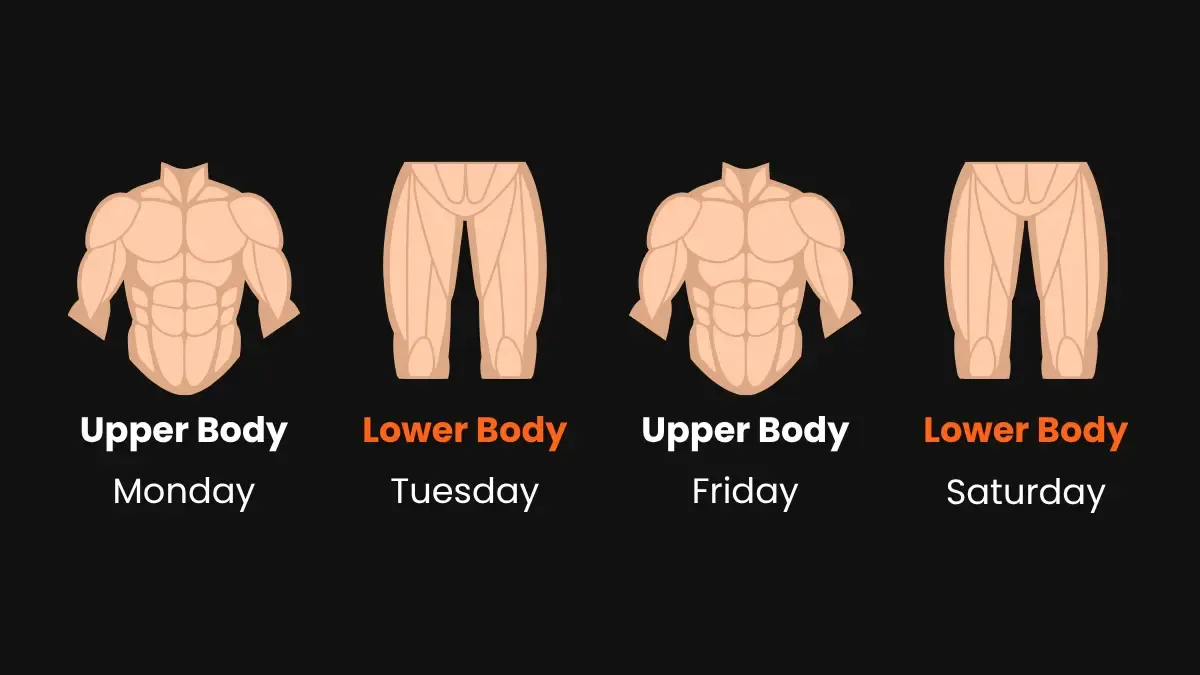
If you want to train 4 times per week, the classic upper body lower body split works great. This can be used by beginners if they want to train more often as well as intermediate and advanced lifters, although the exercise variation and volume will be different depending on the level of advancement of the individual. A commonly used set up is training on Monday, Tuesday, Thursday, and Friday.
If you would like to train 5 times per week, there are a number of different options available. A 5-day upper-lower body split using an extra upper body day, as well as a hybrid set up such as the upper/lower/push/pull/legs, can work great. These splits are more appropriate for intermediate lifters who may need to perform a little extra volume.
If you would like to train 6 times per week, then the classic push, pull, legs split can work well. This is best used for intermediate and advanced lifters, as factors such as recovery need to be on point. For general population clients who have to work a 9 to 5 job, this is probably not the best option. Advanced lifters such as those who work in the fitness industry or compete at a high level and have time to train most days will often use this training split.
These are by no means the only way to organise your training; they are simply a few of the most popular and effective training splits. If you would like to take the guesswork out of your training, you may wish to check out our customisable program templates.
Program Templates
Stop Guessing And Start Progressing. Grab Your Program Template Today.
Our program templates are designed to help you build the Modern Fit Physique. Learn how to train effectively to build muscle without burning yourself out, performing excessive amounts of volume, and spending your life in the gym.
All Templates: £19
Choosing A Progression Model
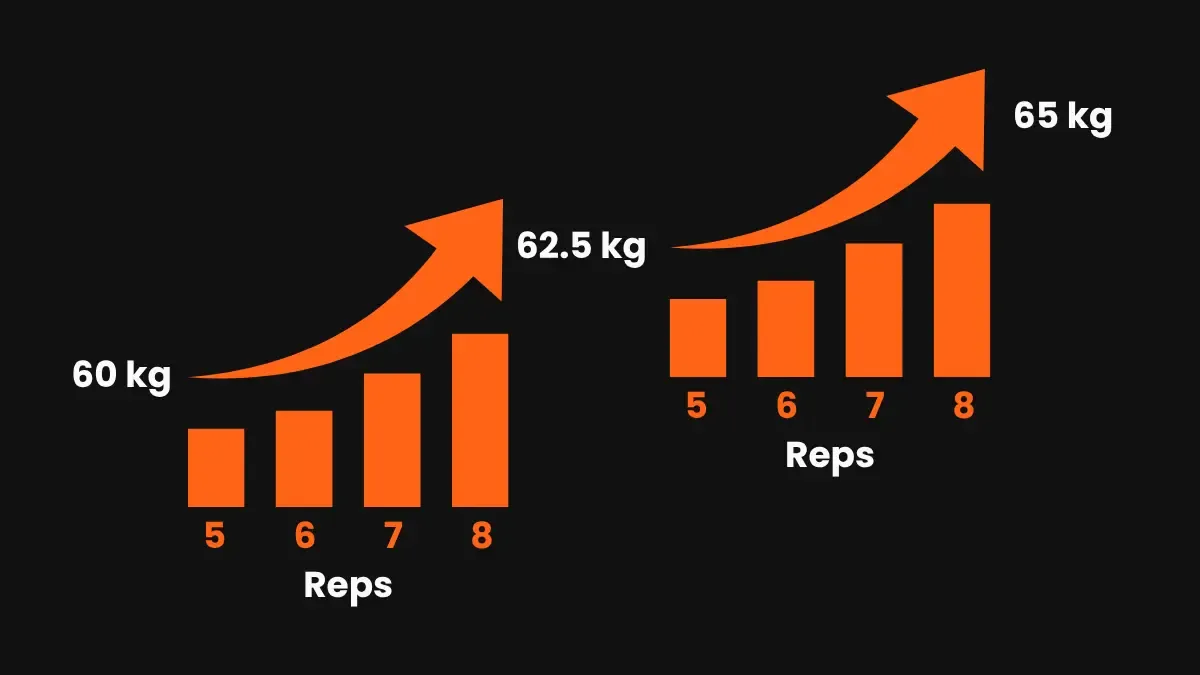
It is important to have a progression model when training to build muscle. A progression model is a method or strategy used to increase the stress placed on a muscle group over time in order to achieve progressive overload. When the goal is building muscle, it is important to increase the amount of weight we are lifting within a medium repetition range over time, as mentioned previously. To do this, we can slowly increase the number of repetitions we perform for an exercise until we reach a target number of repetitions or rep goal. When this is achieved, we can increase the weight.
This allows us to stay within our target repetition range, while performing our sets at a close proximity to muscular failure, maintaining the correct intensity so that our sets are stimulative for hypertrophy. A simple and effective way to do this is to use the progression model known as double progression. With double progression, we use two variables to progress with: these are weight and repetitions. We add reps until we reach the top of our chosen repetition range, before increasing the weight. The amount of weight we add should allow us to hit at least the bottom of our repetition range. We then repeat the process.
You can also use single progression. As the name suggests, this progression model uses only one variable to progress with. With single progression, we perform a set number of repetitions for an exercise and increase the weight by a small amount each week so that we are able to hit the same number of repetitions we completed the previous time we performed the exercise. This can work well for beginners as they are able to progress quickly enough to be able to perform the same exercise again without losing repetitions each week. An example of this can be seen in beginner programs such as 3 x 5 or 5 x 5.
Single progression is best used with compound barbell lifts where a small amount of weight can be added to the bar each week, usually 2.5kg or 5 lbs. You can even use fractional plates, which will allow you to add even less weight to the bar each week, ensuring you can always hit your repetition target while increasing the weight a little each week. Single progression will not work with dumbbells as you cannot move up to the next set of dumbbells as regularly as the weight increase is too large to be able to maintain a single repetition target.
Nutrition
It goes without saying that nutrition is extremely important when the goal is building muscle. You can think of nutrition or diet as the other side of the equation in terms of hypertrophy or training to build muscle. The training we perform in the gym is the stimulus, the signal we send to our muscles that an adaptation is required so that we can handle the stress we have placed on the body better next time. Nutrition is what permits that adaptation to take place, providing the body with the resources it needs to build new muscle tissue and recover from hard training sessions.
A diet that is set up well for the goal of building muscle will also allow us to train hard at the correct intensity so that we are able to send a strong signal to the body to adapt. If we do not have the energy and mental focus to train hard and perform our sets at a high level of intensity, then our training sessions will not be effective at stimulating muscle growth.
Eating Enough To Gain Weight And Maximise Muscle Growth
To maximise the potential for the body to build new muscle, we must be eating enough. This means consuming enough calories so that our body has the resources to build new muscle, as well as recover from hard training sessions. Beginners will be able to build muscle eating at around maintenance calories, assuming they are not too lean. They are in an untrained state, and their muscles will be desensitised to the new stimulus which comes from lifting weights. They can even build muscle in a small calorie deficit, assuming their training is productive and other factors are in place, such as consuming adequate protein.
Once past the beginner stage, it is best to eat in a slight calorie surplus to maximise the amount of muscle we can potentially build. This means consuming around 200-300 calories above maintenance calories. This would be considered a lean bulk or lean gaining phase. Eating enough to ensure we are maximising muscle growth without overeating, which will only lead to a faster rate of body fat gain. It is important to note that an increase in body fat is to be expected in a gaining phase; the goal should be to minimise this as much as possible while still eating enough to maximise muscle growth.
Consuming more calories will only assist in building muscle up to a point, and consuming more will not result in more muscle growth; it will result in more body fat, however. Gaining too much body fat will be detrimental to muscle growth because an individual will need to enter a calorie deficit sooner in order to lose body fat. This means they are spending less time in an optimum nutritional state to maximise muscle growth throughout the year.
Estimating Starting Calories
Determining your exact maintenance calories and therefore the amount of calories you need to consume for a lean bulk is fairly difficult. Your metabolic rate is determined by many things and will also change over time. Your day-to-day energy expenditure may also fluctuate and can be affected by many things. Luckily, we do not need to know the exact amount of calories we should be consuming and can instead go by our rate of weight gain over a period of time.
With this in mind, we can use a simple TDEE calculator to estimate our starting calories. This may or may not be accurate for you; however, it will get most people in the ballpark for where they need to be. As you will be adjusting your calories based on the rate of weight gain, it does not matter if they are not 100% accurate at first. TDEE is the number of calories you need to maintain your body weight taking into account your daily activity and the amount of exercise you perform. This is also known as maintenance calories. Once you know this number, you can add 200-300 calories to this number to establish your numbers for a lean gaining phase.
Can You Gain Muscle Without Gaining Body Fat?
As mentioned previously, beginners can eat at around maintenance calories or even in a slight calorie deficit and still build muscle. In this situation, an individual may be building new muscle tissue and losing body fat at the same time, resulting in their weight staying fairly stable. This is known as a body recomposition or a recomp. It is more likely to happen in untrained individuals such as beginners, and it is also more likely to happen if the individual has a higher body fat level. This is because the body can use stored energy in the form of body fat to build muscle even though calories may be at maintenance or slightly lower.
If you are past the beginner stage, you may still be able to build some muscle without gaining body fat; however, it may come at a slower rate. If you want to maximise your potential to build muscle, it is recommended to aim for a small calorie surplus, which will result in some body fat gain. As long as the rate of body fat gained is not excessive, this is not a problem, as it can easily be reduced by using mini cuts and longer fat loss phases. The risk of trying to gain muscle without gaining body fat as an intermediate lifter is that you may waste months or even years with little or no progress in terms of building muscle.
How Fast Should You Gain Weight?
Assuming you are not recomping, you should be looking for your bodyweight to increase slowly over time. If this is not happening and your body fat is not reducing, you can be fairly sure that you are not building muscle, even if you are getting stronger. As muscle growth is a fairly slow process, even for beginners, we should be looking at weight gain over a longer period of time compared to if we were looking at weight loss in a fat loss phase.
You may not be gaining weight on a weekly basis, so it is best to monitor over a larger timeframe such as one month. We recommend gaining around 0.5 to 1.5% of your body weight each month. This will depend on a few factors such as your training age, how lean you are, as well as whether you are okay with gaining a little more body fat or not.
Below are some recommendations for rates of weight gain. These are simply rough guidelines and are not set-in-stone recommendations. The individual should always be taken into consideration. The role of genetics will also be a factor; some people may be able to gain at a faster rate, and some people may need to gain at a slower rate to minimise fat gain.
Beginners: 1-1.5% of bodyweight per month.
Intermediates: 0.5-1% bodyweight per month.
Advanced: 0.5% bodyweight or less per month.
As a general rule, if you are skinny with low levels of body fat, you can aim for the higher end of the recommended rates of weight gain. You may even need to go higher. If you have more body fat, you can aim for the lower end of the recommendations. If you are skinny fat, meaning you have a fairly high body fat level with not much muscle, you may want to aim for a recomp rather than gaining more body fat. A body recomposition phase can be run with calories at around maintenance calories or slightly under, as used in our 12-week body recomposition program.
Protein
Along with consuming enough calories to build muscle, one of the most important things to maximise our potential to build muscle is consuming enough protein. Protein is used to build new muscle tissue and is also crucial for recovery from hard training sessions. It is the building block of new muscle tissue. It is also essential for many other functions in the body; therefore, in order to cover this as well as the building and repair of muscle, those who strength train regularly with the goal of building muscle will need to consume more than the general population.
With that said, we do not want to over-consume protein. Similar to consuming more calories, consuming more protein will only be beneficial to muscle growth up to a point. Research has suggested that 0.7 grams of protein per lb of body weight is adequate to maximise muscle growth, although there has been criticism of how these studies have interpreted the data to come to this conclusion. Most coaches will recommend a slightly higher protein intake of around 1 gram per lb of body weight. A slightly higher protein intake has no negative effects, so it may be a good idea to consume a little extra.
Going higher than 1 gram per lb of body weight may be slightly more effective, although this is still unclear at this point. This would be more appropriate for advanced lifters who compete in physique sports such as bodybuilding and want to maximise everything they can in order to build the absolute most amount of muscle possible. For the general population and non-competitive individuals who still want to build muscle, 1 gram of protein per lb of body weight is likely plenty. Consuming more protein will also leave less room for carbohydrates and fats, which is another thing to be aware of.
For individuals who are holding an excessive amount of body fat, protein should be based on estimated body fat percentage to avoid the overconsumption of protein. There is some research that suggests eating too much protein can also be detrimental to hormonal health, including testosterone levels. For this reason, we prefer to keep protein as low as possible as long as we are still able to build muscle and recover well from training sessions.
Carbohydrates And Dietary Fat
As we have set protein by bodyweight, the rest of our calories will be allocated to carbohydrates and dietary fat. The balance of carbohydrates to fats can be fairly individual and can be based on personal preference as well as what the individual feels best on. In terms of building muscle, people have had success on high carb low fat, low carb high fat, as well as a mixed approach. What we see works best for most people is a moderate to high carb approach with moderate to low fat, although there are aways exceptions.
For most people, we recommend a balanced approach. We define balanced as a diet that includes all three macronutrient groups and does not exclude whole food groups such as carbohydrates. Nutritional philosophies such as the carnivore diet and ketogenic diet have become extremely popular in the last decade. These diets do have their merits, and we agree with many of the principles they promote; however, we believe removing carbohydrates, especially long-term, is not a good idea, especially when we are looking to maximise our performance in high-intensity activities such as strength training.
Carbohydrates are the body’s main fuel for high-intensity activity such as strength training, and many people will report a drop in performance if they remove carbohydrates from their diet. They are also extremely useful at keeping the stress hormone cortisol in check and are also important for metabolic and hormonal health. Most people will see a decrease in thyroid hormone production when they remove carbohydrates from their diet in the long term. Carbohydrates are also positively correlated with healthy testosterone levels.
Dietary fat is also important for hormonal health and, along with protein, will also slow the digestion of a meal, allowing you to stay full between meals and avoid blood sugar crashes from high-carbohydrate meals. Some people do better with a lower-fat approach, and some do better with more of a moderate-fat intake. In general, the amount of dietary fat we consume will depend on whether we have adopted a high-carb or more moderate-carb approach. As dietary fat goes up, carbohydrates will need to go down, and vice versa, to avoid calories becoming too high, which will lead to excessive body fat gain.
Meal Frequency And Protein Servings
Meal frequency is the number of meals eaten per day. We can use meal frequency to distribute calories and macronutrients over the day, in a way that fits our lifestyle and personal preferences. In terms of building muscle, meal frequency is not as important as we once believed. Research, as well as experience from coaches and gym enthusiasts, including those who compete in physique sports at a high level, indicates we do not need to eat multiple meals throughout the day, such as five or six, or even more.
A higher meal frequency can be useful when an individual has to consume a large number of calories. In this situation, eating more meals throughout the day makes sense, and this is why some bodybuilders will use a higher meal frequency. We find 3-4 meals per day is the sweet spot for most people. If you prefer to eat smaller, more frequent meals throughout the day, you can experiment with a higher meal frequency. If you find eating 3 larger meals throughout the day is a better fit for your lifestyle, then you should probably do that.
As with the training side of building muscle, adherence and consistency over months and years are crucial for building muscle. Choose a meal frequency that allows you to hit your calorie and macronutrient targets consistently. Eating 3-4 meals spaced out at least somewhat regularly throughout the day is also important, because this will provide 3-4 protein servings throughout the day, assuming the meals are well balanced and based around protein. This is important because when we eat a meal with a certain amount of protein, muscle protein synthesis is maximised.
Some studies have shown that 20-30 grams of protein will maximize muscle protein synthesis, assuming the majority of the protein comes from high-quality sources such as animal proteins. This is because animal sources of protein contain higher amounts of the amino acid leucine, which has a powerful effect on stimulating muscle protein synthesis. It has been suggested that if a meal contains more plant-based protein, then the meal should contain more protein overall. The amount of protein required to maximally stimulate muscle protein synthesis will likely also depend on the size of the individual as well as their age. Older individuals may require more protein.
How much of a difference muscle protein synthesis of an individual meal makes to muscle growth, and whether we need to maximise this is not clear at this time. Most researchers agree that the overall amount of protein consumed throughout the day is likely more important, as well as sending a strong signal to the muscles to adapt through productive hypertrophy training. With that said, when we look at multiple meals per day over years, it may make a small or even significant difference to muscle growth.
Since most people will eat 3-4 meals per day anyway, it makes sense to aim for a minimum amount of protein in each meal. As a general guideline, we recommend 30-50 grams of protein in each meal spaced approximately 3-5 hours apart. This will depend on your protein target for the day, as well as your meal frequency. It may also be beneficial to have a protein serving 1-2 hours after a training session. If you have not eaten for 4-5 hours before your training session, it is probably a good idea to consume protein as soon as you can after a training session, even if this is just a protein shake.
Food Quality
The foods that make up our calories and macronutrients are important, especially when performing high-intensity activities such as strength training, as we are purposely stressing the body in order that it adapts, becomes stronger, and builds new muscle. We also want to have energy and focus to push ourselves hard in the gym to maximise our potential to build muscle and recover well. The majority of our foods should consist of nutrient-dense whole foods that are minimally processed or not at all. Whole foods contain higher amounts of micronutrients, the vitamins and minerals which are vital for performance and recovery as well as our general health.
It is important that you choose foods which work well for you, rather than eating foods just because you believe or have been told that they are must eat foods, or are the ‘best’ foods for building muscle. Foods that cause you digestive stress should be avoided, as gut health is extremely important, especially when we are looking to absorb the nutrients contained in the foods we eat well to help us build muscle. The foods that will help you hit your macronutrient targets consistently and the ones you enjoy eating will be best.
We find that following the principles promoted in the bioenergetic model of health work well for most people. These are choosing easy-to-digest carbohydrates such as fruit and fruit juices, well-cooked potatoes and other root vegetables and white rice, and avoiding starches that can be problematic to many people, such as grains, especially commercially bought ones. Consuming high-quality animal sources of protein, including high quality dairy, and prioritising healthy saturated and monounsaturated fats is also recommended.
Do You Need To Track Your Food?
You do not need to track your calories and macronutrients to build muscle; however, you will need to be in a small calorie surplus if you want to maximise your potential to build muscle. To ensure you are in a calorie surplus, you can track your bodyweight trend over time. If your bodyweight is increasing, you are likely in a calorie surplus even if you do not know the precise number of calories and macronutrients you are consuming each day.
It is probably a good idea to track your protein intake, at least now and again, to ensure you are around your daily target. As long as you have enough carbohydrates to train hard and recover, your carb to fat ratio can be somewhat flexible, and may even be different each day.
With that said, it may be useful for beginners to track their macronutrients, at least for a period of time. This can help them learn about the different food groups and establish if they feel and perform better on different ratios of carbohydrates to fats. Some people may feel better on a high-carb, low-fat diet, while others may feel better on a lower-carb, higher-fat diet. Many people do best on more of a mixed approach, consuming a decent amount of carbohydrates as well as a moderate amount of dietary fat.
Guidelines For Starting Macronutrient Targets And Diet Structure
Calories: + 200-300 above estimated TDEE or around TDEE for a recomp.
Protein: 1 gram per lb of bodyweight (use estimated lean body weight if overweight).
Dietary fat: 20-35% of total calories.
Carbohydrates: Remaining calories.
Meal frequency: 3-4 meals per day.
Protein servings: 3-4 equally sized (approximately) servings per day (30-50 grams) spaced out somewhat regularly throughout the day such as every 3-5 hours.
Collecting Real World Data
Collecting real-world data, such as body weight and body part measurements, is crucial because it provides clear and objective information about our progress. This data helps us assess whether our current training is productive and allows us to make adjustments based on our current rate of progress and results. Training that produced a certain level of development may not be effective for making progress into the intermediate stage or beyond.
Body Weight
Although body weight alone does not tell the whole story behind whether we have gained muscle or not, it is still a reliable indicator of muscle growth if used the right way in combination with other data. If we are gaining body weight at the correct rate and we are getting stronger (lifting more weight over multiple sets in a medium repetition range), this is a good indication that we are building muscle, although some of the weight gained will be from body fat. Since muscle growth is a slow process, we’re looking for a monthly trend of bodyweight increase.
To improve accuracy, we recommend weighing yourself each day and then looking at your body weight average over a period of time, usually 2 weeks to a month. The main thing we are looking for is a monthly increase as a percentage of your body weight. This will smooth out the natural fluctuations in daily body weight. Some weeks the scale may not move or barely move at all, and some weeks, it may increase.
As long as your average weight from one month to the next month is increasing at around your target rate, you are heading in the right direction. You will also find that weight gain is not linear. Some months you will only gain a little, it may even be under your target rate, while other months you may see a larger increase in body weight. For the most accurate results we recommend you use the following strategy:
Weigh yourself first thing in the morning, before you have eaten, and after you have used the bathroom.
Use the same set of scales, digital if possible.
Weigh yourself with no clothes on.
Record your daily weight.
Use your daily weigh ins to work out your monthly average weight and compare to the previous month.
Now you have some real world data you can make adjustments to your calorie and macronutrient intake based on your results:
If you have gained at or around your target rate do not change anything.
If you have not gained any weight, increase your calories by 200-300 from carbohydrates, fats, or a combination of both.
If you have gained a little, however, it is under your target rate, you can increase your calories by 100. You can also keep your calorie intake the same and monitor your weight for one more month. If it has still not increased, then you should increase calories by 200-300.
If you have lost weight increase your calories by 300-400.
Recovery And Lifestyle

The training we perform in the gym each week is the signal we send to the body to force an adaptation; however, this is only a small amount of time compared to the rest of the hours in the week. The things we do outside of the gym will play a huge role in determining the results we achieve from a training program. Although some things may not seem that important, when we zoom out and look at the big picture over years and years of training, these things matter and will help maximise the amount of muscle we can potentially build.
Certain lifestyle habits and strategies will compound over time and can be the difference between achieving okay or mediocre results and truly outstanding results, at or close to your true genetic muscle-building potential. If you do a really bad job at managing some of these important lifestyle factors, your results may even be poor or, in the worst-case scenario, nonexistent, at least past the beginner stage.
Sleep
For recovery from our training sessions, sleep is going to be hands down the most impactful thing we can focus on and try to optimise as much as possible. The better our recovery, the harder we can train and the more volume we can perform and recover from, up to a point. It is also vital for our overall health and will help maintain good hormonal and metabolic health. Sleep quality and duration are positively correlated with increasing and maintaining healthy testosterone levels in men. The bottom line is that getting consistent, good-quality sleep will make body composition goals such as building muscle and losing body fat far easier.
Here are some strategies for improving sleep quality:
Try to get to bed and get up at the same time each day, even at weekends.
Create a nightly routine. Having a set routine to start to wind down each night can teach your body to prepare for sleep.
Try to avoid over-stimulating activities for the last few hours before bed. Instead, choose activities that help you to wind down, such as reading, journaling, meditation, deep breathing, stretching, listening to relaxing music, or taking a relaxing bath.
Try to avoid blue light from tv screens, computers, tablets, smartphones, and modern LED lighting for the last few hours before bed. If this is not possible, try investing in a quality pair of blue light-blocking glasses. You can also use red light bulbs to light your home in the evening, which will not affect your sleep quality like artificial blue light.
Sleep in a cool, dark, and quiet room if possible, with no electronic devices in. If you need to, use black-out curtains or blinds, sleep masks, and earplugs if you live in a noisy environment. You can also experiment with white noise, such as using a fan to block out background noise.
A good night’s sleep starts with what you do first thing in the morning. Getting sunlight into your eyes first thing in the morning can help regulate your circadian rhythm, which can improve sleep quality. More exposure to natural light, even if sporadically throughout the day, will also help with this. Some good times to get some sunlight include midday and late afternoon/early evening.
Do not consume large meals 2-3 hours before bedtime.
Limit or avoid caffeine in the afternoon and evening. We all have different tolerance levels to caffeine. Some people can consume more caffeine without it affecting sleep quality, and some people less. It is also worth noting that caffeine may be affecting sleep quality even if you believe it is not affecting your ability to fall asleep. It may be worth experimenting with reducing your caffeine intake to see if you see any benefits.
Turn off your Wi-Fi at night and keep your phone out of the bedroom, turned off or on airplane mode.
Experiment with earthing sheets.
Stress
Stress is not inherently bad, it is a normal part of life and can not be avoided altogether. Acute stress can be beneficial, such as the short bouts of stress from a training session in the gym. This stress is the mechanism behind how we adapt and grow stronger over time. Stress only becomes a problem when it is too great and exceeds the ability of our body to recover from it.
The real problem, especially in the modern world, is chronic stress, which can be caused by things such as poor nutrition leading to nutritional deficiencies, as well as over-exercising and under-eating. Of course, psychological stress is also a big problem, especially in the modern world, where people have stressful jobs, financial and relationship stress, or they find themselves in a negative environment they feel they cannot escape from.
When stress is elevated all of the time, the body is in the ‘fight or flight’ mode. This is controlled by the sympathetic nervous system, which prepares the body for strenuous physical activity. This is a vital survival mechanism and helps us survive dangerous situations; however, it is not good for us to remain in this state, as over time the body will begin to break down. In this state, the stress hormone cortisol can be chronically elevated, which makes building muscle and losing body fat much more difficult or even impossible in certain cases. It is also extremely detrimental to our overall health.
Here are some strategies that can help mitigate stress:
Practice deep breathing. Performing diaphragmatic breathing has been shown to reduce stress and bring down cortisol. There are many different methods for this; in general, as long as your exhales are slightly longer than your inhales, you’re good to go. Breathe deeply and slowly through the nose. You can also try the double breathe method. To do this, inhale about 90%, then take a short pause, followed by a quick inhale to 110%. Then exhale, always focusing on nose breathing.
Take a walk, in nature if possible, to take your mind off the stress. Simply putting yourself in any relaxing environment can help. Many people feel better after taking a walk, a great way to clear your head.
Get more sunlight. Sunlight releases dopamine, which can decrease stress. Any amount of sunlight is better than none, and the more the better, as long as you do not burn.
Choose who you spend time with. You are the average of the people you spend most of your time with. Hang out with positive people who do not drain you of energy and bring you down. If you need to ditch old friends who are not on the same path as you, then you may need to.
Avoid too much social media, and stop comparing yourself to other people. Avoid consuming negative information from news and social media.
Supplement with magnesium. Stress depletes magnesium. Magnesium helps keep cortisol in check. A low-sodium diet can also make it difficult for the body to hold onto magnesium. Use a quality sea salt. Magnesium glycinate is a good form of magnesium to supplement with. You can also take magnesium flake or Epsom salt baths.
Do something relaxing, especially at the end of the day. Take magnesium flake or Epsom salt baths. Read or listen to an audiobook. Watch something funny; laughter is one of the best ways to relieve stress quickly.
Try journaling. Writing things down is a good way to get things off your mind and clear your head, especially before bed. Write down things you need to do and things that are bothering you.
Practice meditation or mindfulness. You do not need to sit in the lotus position. Try a walking meditation.
Daily Activity
Maintaining a degree of daily activity is important for our overall health and is also beneficial for fitness goals such as building muscle and maintaining a healthy body fat percentage. Structured exercise we perform in the gym will not completely negate the negative effects of living a sedentary lifestyle. As far as energy balance is concerned, traditional strength training such as the type we perform to build muscle will not burn a large number of calories. Cardio will burn a moderate number of calories depending on the intensity; however, the majority of calories we burn throughout the week will come from our daily activity. This is also referred to as Non-exercise activity thermogenesis (NEAT).
From an evolutionary perspective, our bodies are perfectly adapted to perform mostly low-intensity activity with the ability to perform high-intensity activity for short periods of time when needed. Moving into the modern world, we can see why combining low-intensity general activity with high-intensity activity such as strength training is so beneficial for our overall health. What is not good for our bodies is long periods of inactivity throughout the day, even if we are still performing structured exercise in the gym for 3-5 hours per week.
As humans, the activity we are perfectly adapted to is walking. We can walk for long distances even without food, and as walking is low intensity, it is not stressful on the body. For this reason, the easiest way to ensure we are maintaining a degree of daily activity is to simply walk more, and having a daily step target is an easy way to quantify this. The good news is that we can make walking a part of our everyday life, even when we are working jobs that are fairly sedentary in nature.
For body composition goals, walking more throughout the day will allow us to consume more calories while maintaining our body weight, and will also allow us to consume more calories in a lean gaining phase without gaining body fat too quickly. The more calories and therefore food we can consume, the more nutrients we can consume, which will be beneficial to our training, recovery, and general health. This is assuming we are eating nutrient-dense whole foods and are not in too large of a calorie surplus.
The commonly stated goal of 10K steps per day is a good target to aim for. We recommend anywhere from 8-12K steps per day. This range has been shown in studies to be extremely beneficial to our general health and is also realistic and achievable for most people. With that said, as many people are working in fairly sedentary jobs, some conscious effort and habit building may be required to reach this target.
Here are some useful strategies for including more walking into your daily lifestyle:
Walking first thing in the morning is a great habit to build and can help you get in a considerable amount of your daily steps before your day has even started. As walking is low intensity, you can do it fasted before breakfast if desired. Walking first thing in the morning will also allow you to tick some other lifestyle habits off for the day, such as getting sunlight first thing in the morning.
Walking after meals is a great way to get more steps in for the day, and has even been shown to improve blood sugar control and improve insulin sensitivity after a meal. It may also help with digestion. This simple strategy involves walking 5 minutes away from your current location and then walking back, meaning you can do it anywhere. If you are eating 3-4 meals per day, that will result in 30-40 minutes of walking, which could amount to half of your daily step target.
As walking is so easy, you can use walking for multitasking. You can walk while taking a call, either for work or social, whether outside, in the office, or at home. Walking is also a great time for personal development, such as listening to audiobooks and podcasts.
Scheduling in longer walks of an hour or more when you have free time, such as after work, can really help get your step count up for the day. Even some longer walks or hikes at the weekend can get your average daily step count up for the week, even if some days your steps were a little lower.
Walking around the gym between sets rather than simply sitting down and looking at your phone can increase your daily step count. Add some incline walking on the treadmill for 10 minutes at the beginning of a training session to warm up, and 10-20 minutes at the end can also be a good strategy.
Purchasing a walking treadmill to use with a standing desk at work or at home can be a great option.
Ditching the car and walking to a nearby location if possible can be a simple way to get in more steps for the day, or at least parking a little further away from where you intend to visit.
The bottom line with daily activity and walking is to just fit as much as you can into your daily lifestyle in a way that is convenient to you and sustainable.
Cardio
Although performing regular cardio is not required for building muscle, it is probably a good idea to maintain at least a baseline of cardiovascular conditioning. It may even be beneficial for muscle growth. Having a good level of cardiovascular fitness will improve your work capacity in the gym and will allow you to work at a high level of intensity when performing your sets. The benefit of this would be seen most clearly when performing extremely challenging exercises such as when training legs, especially using higher repetition sets.
When performing any exercise, we want the limiting factor to be the target muscle group, not our cardiovascular system. For example, if we have to stop a set of squats because of poor cardiovascular fitness, rather than the quads fatiguing, then the set will not be effective for building muscle. Having a decent base level of cardiovascular conditioning will likely also improve recovery from our strength training sessions. It has also been suggested that nutrient partitioning may be improved, meaning more of the calories and micronutrients we consume will go to building muscle rather than being stored as body fat.
It is interesting to note that some of the most well known natural bodybuilders/fitness influencers online with the most impressive physiques have come from a background of endurance sports such as running, and still continue to perform regular cardio, although at a reduced amount. It has been suggested that this may be the reason that they have been able to build such impressive physiques. They are able to perform more volume, push themselves harder, and recover better due to their high level of cardiovascular fitness. We cannot be sure that this is the reason for the amount of progress they have been able to make; however, it is likely a contributing factor at least.
What this does prove is that performing a moderate amount of cardio regularly will not hinder our ability to build muscle, as is sometimes believed, and it will likely be beneficial to muscle growth in the long term. It is also important for our health and longevity. Although low-intensity activity such as walking is great for cardiovascular/heart health, improving our cardiovascular fitness will require us to work at a higher intensity level.
With that said, the interference effect is a real thing, and the adaptations the body makes to endurance activities compared to strength training are at 2 opposite ends of the spectrum. We cannot be an endurance athlete and maximise the amount of muscle we can build at the same time. We only have so much recovery ability as well as days in the week to train, so we must use cardio wisely when our main goal is building muscle. Luckily, we can get the majority of the benefits and improve and maintain a good level of cardiovascular conditioning with a relatively low amount of weekly cardio.
As far as cardio is concerned, we have two main options. Steady-state cardio involves working at a low to moderate intensity for a specific duration, while high-intensity cardio involves working at a high intensity for a short period, followed by periods of low-intensity work for recovery. Working at different intensities will result in different adaptations by the body, and will also have their own pros and cons. The one you choose can come down to personal preference as well as what best suits your current training split, your current goals, and your current lifestyle.
Lower intensity cardio is less stressful on the body and therefore does not impact recovery as much as performing high intensity cardio. This can make it a good option for individuals whose main goal is building muscle and are pushing themselves hard in the gym. Being able to get the benefits of improved cardiovascular fitness without impacting recovery from strength training sessions to any large degree is a smart idea.
Low to moderate-intensity steady-state cardio is an excellent way to build a solid foundation of cardiovascular fitness and endurance. The downside is that it does require a slightly longer time commitment each week compared to performing high-intensity cardio. If you want to truly maximise your performance and cardiovascular fitness, incorporating some higher-intensity cardio would be beneficial. This is another potential downside of relying solely on lower-intensity steady-state cardio.
High-intensity cardio will result in different adaptations compared to lower-intensity cardio and will develop things such as power, speed, and explosiveness. These adaptations are similar to the adaptations caused by strength training, and therefore many strength-based athletes prefer to perform high-intensity cardio. It is also more time-efficient, meaning we can get a lot of work done in a short amount of time. The downside to high-intensity cardio is that it will impact recovery significantly more than lower-intensity cardio, depending on how much you are performing. For this reason, more thought needs to be given to the amount of high-intensity cardio you perform each week and where you place your high-intensity cardio sessions in relation to your strength training sessions.
True high-intensity cardio involves nearly 100% or 100% efforts for a short duration, usually 10-15 seconds. This means sprinting or almost sprinting at maximum effort for 10-15 seconds. If you can sustain this level of effort for more than 10-15 seconds, you’re not performing true high-intensity cardio. Therefore, your overall health and fitness should be considered when deciding whether high-intensity cardio is appropriate for you, as well as the equipment you use. With that said, we can receive the benefits of high-intensity cardio with a surprisingly small amount each week. Performing just 2-3 sessions of 10-15 minutes each week can be beneficial, and this will not impact recovery to any large degree for most people.
The caveat here is that it is not causing any muscular/joint discomfort or pain or leading to regular injuries. It is probably not a good idea to start sprinting if you have not run since you were in high school! Other machines such as an assault bike may be a better option. If you would like to increase or maintain your cardiovascular fitness without impacting your ability to build muscle, a smart strategy for most people is to use a combination of low-intensity steady-state cardio combined with some high-intensity cardio throughout the week.
Here are some general cardio recommendations:
3-4 sessions of steady-state cardio per week for 25-45 minutes, working at around zone 2. This means you should be able to maintain a conversation without gasping for air. To get an approximate heart rate, you can use 180 minus your age.
1-3 high-intensity sessions per week for 10-20 minutes. A simple high-intensity session could look something like a 10-second effort (95-100% effort) followed by 50-90 seconds of recovery (low intensity/easy) for 5-8 rounds. Remember to warm up and cool down.
Good options for low intensity steady state cardio include elliptical trainers, spin bikes, incline treadmill walking, and running outside.
Good options for high-intensity cardio include assault bikes, ski machines, sprints and hill sprints outside, treadmill running, spin bikes, rowing machines, and sled pushing.
The recommendations above do not necessarily mean you need to perform 3-4 sessions of steady-state cardio and 1-3 sessions of high-intensity cardio per week. This may be too much for many people. You might perform 3-4 sessions of steady-state cardio if you were not performing any high-intensity cardio, or you might perform 3 high-intensity sessions if you were not performing any low-intensity cardio. A mixed approach might look something like 2 sessions of high-intensity cardio and 2 sessions of low-intensity cardio, or 1 session of high-intensity cardio and 3 sessions of low-intensity cardio per week. Use common sense and pay attention to your recovery and how cardio impacts your strength training performance over multiple weeks.
Healthy Lifestyle Habits
Living a healthy lifestyle will make achieving your fitness goals easier. The healthier we are, the easier it will be to build muscle over time. We’ve already discussed crucial lifestyle factors like eating mostly nutrient-dense, minimally processed whole foods, getting sufficient quality sleep, managing stress as much as possible, creating a positive environment, and avoiding negativity. Daily activity and trying to get as much sunlight as possible are also important. The other side of living a healthy lifestyle is removing or limiting unhealthy habits.
The things we all know are detrimental to our health should also be addressed if we want to live a healthy lifestyle and maximise our potential to build muscle. Excessive alcohol consumption, for instance, severely impacts the results we can expect to achieve. Even having one or two drinks each night over the long term has a negative effect and will affect sleep quality as well. Avoiding alcohol during the week and drinking excessively at the weekend is also detrimental to our health and fitness goals. The other obvious things we should remove if we are looking to maximise our potential to build muscle and improve our overall fitness are smoking, including cannabis, as well as other recreational drugs.
Building The Modern Fit Physique
The Modern Fit Mastery fitness philosophy involves building a lean, athletic physique without compromising other areas such as cardiovascular fitness and our overall health and well-being. We think long-term progress and sustainability rather than short-term strategies. Short-term strategies may provide quick or short-term results in terms of aesthetics but may not be great for metabolic and hormonal health. The aim is to be healthy, feel great, both physically and mentally, and have good energy to perform at our best in the gym and in life.
When this is the case, this usually results in the aesthetics most people are looking for without placing excessive stress on the body. Having a lean, muscular build and looking healthy is also an indication of health when we do things the right way, and the easier we are able to achieve this, the better our overall health likely is. This is a different approach from driving things such as fat loss through stress. We call this the Modern Fit Physique.
With this in mind, we use the principles discussed in this guide and implement strategies to build muscle and lose body fat in a way that aligns with our overall health and fitness philosophy while mitigating stress on the body as much as possible. This is even more important in the modern world where people often have busy and often stressful 9-to-5 jobs as well as other life commitments, responsibilities, and stresses.
Body Recomposition First
Almost every man is carrying some excess body fat, some far more than others. Even those who would be defined as thin or lean by general population standards, which is not a high standard by any means, are still carrying more body fat than they think. Even experienced health-conscious fitness enthusiasts who may have been training for some time, have made decent progress, and are doing most things right, find out they have far more body fat than they think, when they commit to a proper and well-executed fat loss phase. As they start to approach decent levels of leanness, believing they are around 10-12 percent body fat, they are, in fact, usually just approaching 15 percent.
Before starting any building phase, where the goal is to maximise our ability to build muscle, we recommend a dedicated fat loss phase. We prefer to call it a body recomposition phase, as the goal is to build some muscle as we drop body fat, even though we are not placing the body in an optimal state to maximise muscle growth. This is phase one of building the Modern Fit Physique.
Getting lean first, around 10-12% body fat, has a number of benefits. Some of these include improved insulin sensitivity and nutrient partitioning, reducing inflammation, and improving metabolic and hormonal health. The healthier we are in general, the easier we will be able to build muscle in the future, as mentioned previously. The other huge benefit, and we would argue necessity, is that starting a building phase at a decent level of leanness provides a long runway ahead for building muscle without gaining excess body fat when maintaining a small calorie surplus to maximise muscle growth.
Building Phases
After a dedicated body recomposition phase, dedicated building phases are used to maximise muscle growth. This is when we place the body in an optimum nutritional environment to build muscle by consuming more calories. The goal is to maximise muscle growth while minimising the accumulation of body fat. Building muscle is a much slower process than losing body fat, and this is the reason we need to commit to long building phases, usually between nine to twelve months.
Building phases are what will eventually result in the Modern Fit Physique, and the majority of your time should be spent in these phases rather than fat loss phases. You need to be in a building phase for more time than you are in a fat loss phase throughout the year. With that said, strategically placed, short-duration fat loss phases, often referred to as mini cuts or clean-up phases, can be used during a building phase to keep body fat in check.
After you have spent a significant amount of time in a building phase, more traditional, longer-duration fat loss phases can be used, usually 8-12 weeks, assuming you have run your building phase well and have not gained too much body fat. This will prime your body for the next building phase, and can even help you reset physiologically if you are sick of having to eat a lot of food.
These dedicated building and clean-up phases are phase two of building the Modern Fit Physique, and you should be in this phase from anywhere from three to five years or even longer, until you are happy with the amount of muscle you have built, and you have decent size even when lean. This will be different for different people, depending on how much muscle they want to build, their genetics, age, and training age, and how productive or effective their training has been.
Training Philosophy
Although the goal is not to be a bodybuilder, we are still using bodybuilding-type training or hypertrophy-specific training, as this is the best way to build muscle. Although the ultimate goal is not to build the absolute most amount of muscle possible and spend our lives in the gym, we are still aiming for a significant amount of muscle, more than 95% of the population. This is a necessity because if we have not built a significant amount of muscle, we will look small at 10-12% body fat, and this is not the Modern Fit Physique.
The good news is that we can build this physique without placing excessive amounts of stress on the body and spending our lives in the gym when we understand principles of strength training such as training volume and how there is a diminishing return on doing more. In simple terms, the first few sets of an exercise will provide the most stimulus for building muscle, with each subsequent set providing less. This does not mean we are only performing two sets per exercise; however, it does allow us to focus on quality over quantity while still training effectively to build muscle.
Yes, we could potentially build muscle a little faster if we performed more training volume, but we need to ask the question of at what cost? Since we are not trying to be bodybuilders, we can set our training up in a way that is less stressful on the body, is arguably better for our overall health, gives us more time to pursue other areas of fitness and life, and fits into the modern lifestyle better. We will likely still reach 90% of our genetic potential, although it may take a little longer. Since we have years and years of training ahead of us, what is the rush?
With this I mind, here are some of the principles and strategies we focus on:
We keep training volume low to moderate.
We focus on set intensity, mostly performing sets at 0 RIR, allowing us to get more out of fewer weekly sets.
We like 3-4 training sessions per week for most people most of the time.
We focus on getting stronger in a medium repetition range over time, using good, standardised form.
We like exercise variety, performing fewer sets on more exercises, while keeping overall training volume low to moderate.
We use a combination of free weight and machine exercises, with a focus on joint and connective tissue health, using exercises that work well for the individual.
Cardiovascular Fitness
We have already discussed the benefits of cardiovascular training and how it can be beneficial to building muscle in the long term. Building a decent level of cardiovascular fitness is a major component of building the Modern Fit Physique, not simply an afterthought or a way to burn a few calories. We take it seriously, the goal is to improve it over time, just as we aim to improve our strength and muscular size through strength training.
Running
Although we can improve our cardiovascular health and fitness using any type of cardio, we place an emphasis on running, and not just running on a treadmill in the gym. Being able to run at a decent pace, over a short to medium distance, outside, and pain free is a skill we believe is an integral component of The Modern Fit Physique. Being able to run, especially outside and over varied terrain, is a good indication that our biomechanics, or the way we move, are in a good place. It is the most natural movement and the movement that the body is designed to be able to do well, along with walking.
Being able to run on a treadmill or sit on a bike, even if you have developed a good level of conditioning, does not mean you have built The Modern Fit Physique. The goal is to be more of an all round athlete, and this means we should be able to run. That's not to say other forms of cardio can not be used, especially during fat loss phases, such as phase one of building the Modern Fit Physique, however, we believe including some running to be beneficial.
We are not looking to break any records here, and the volume and intensity of the running you perform must be based on your current level of fitness as well as the phase of training you are in. Running is best used during a building phase where the goal is to maximise muscle growth as well as build other areas of fitness such as our cardiovascular fitness. We are consuming more calories and carbohydrates during a building phase and our recovery is also greater. Performing higher intensity cardio as well as more fatiguing high impact cardio such as running is less of an issue and the increased hunger levels this type of cardio can cause is not a problem compared to when we are consuming fewer calories in a fat loss phase.
With that said, this type of training has to be limited to some extent as we do not want it to interfere with our strength training and our ability to build muscle and recover from hard training sessions. One to two or up to three, short to medium duration low to moderate intensity runs can be used depending on the individual, their current goals, and the training split they are currently following, as well as their current lifestyle and stress levels.
Health
Living a healthy lifestyle will make achieving your fitness goals easier. The healthier we are, the easier it will be to build muscle over time. We’ve already discussed crucial lifestyle factors like eating mostly nutrient-dense, minimally processed whole foods, getting sufficient quality sleep, managing stress as much as possible, creating a positive environment, and avoiding negativity. Daily activity and trying to get as much sunlight as possible are also important. The other side of living a healthy lifestyle is removing or limiting unhealthy habits.
Frequently Asked Questions
Building muscle is a relatively slow process, and to build a lot of muscle takes years of consistent as well as productive training. With that said, we can change the way we look, feel, and perform relatively quickly in relation to our previous self, especially if we keep our body fat levels in check. As a beginner, we will make the most rapid progress in terms of strength and muscle, assuming we are applying the principles taught in this guide at least relatively well and are consistent.
As we move into the intermediate stage, things will slow down further as the rate of progression we can expect to see is different from a beginner who is in an untrained state and is far from their genetic potential. As we move into the late intermediate or even advanced stage, the rate of muscle gain we can expect to see will be even slower, as we are much closer to our genetic potential.
The role genetics plays in how quickly we can build muscle, as well as the amount of muscle we can build over a lifetime, is also a major factor. Some people will be able to build muscle quicker and will also have a higher genetic ceiling. This is something we cannot influence, unfortunately.
Yes, everyone can build muscle, gain strength, and dramatically change the way they look, feel, and perform when they apply fundamental training, nutrition, and lifestyle principles consistently over time. Most people will fall somewhere in the middle of the genetic bell curve; however, even individuals who may be on the lower end can make fantastic progress. For these individuals, understanding how to train and eat will likely be even more important as they cannot get away with poorly set-up training programs and suboptimal nutrition as much as those individuals who can build muscle more easily. Hard work is also a non negotiable for these indivudals.
It is important you do not define yourself as someone with poor genetics or a ‘hard gainer’ too much. Limiting beliefs are a real thing, and talking yourself into believing you struggle to build muscle can lead to you making subconscious decisions which can limit your ability to build muscle, creating a self-fulfilling prophecy. Many people believe they may be a hard gainer because they do not know how to train, are following poorly designed programs, or are not consistent with their training. When they address these, they are able to build muscle just the same as everyone else.
Intensity techniques such as drop sets, myo rep sets, and forced reps are no better for building muscle than traditional sets. Intensity techniques allow you to extend the duration of a set beyond its natural conclusion, resulting in more repetitions being performed close to muscular failure. Set for set, this may increase the stimulus a little; however, these sets are more fatiguing and will take more to recover from, depending on the exercise you are performing. When we zoom out over years of training, it is not clear how much of a difference intensity techniques make to muscle growth.
That’s not to say intensity techniques cannot be a useful tool in our toolbox for building muscle; however, they are not a replacement for regular sets. They are also more suitable for certain exercises and not so much for others, and are probably more useful for more advanced lifters who need a high level of stimulus to continue to build muscle. We recommend beginners and early intermediate lifters focus on performing high-quality regular sets, with good form, working at a close proximity to muscular failure before thinking about using intensity techniques. One benefit of intensity techniques is that they can be time-efficient, allowing you to get a lot of work done in a short amount of time.
It is possible to build muscle without gaining body fat. This can often be seen in beginners when they start lifting weights and they are eating at around maintenance calories. More advanced lifters will often build muscle when returning to the gym after they have had some time off, when eating at around maintenance calories or even in a small calorie deficit.
Supplements are not required to build muscle, although they can be useful in certain situations. They will not make or break your ability to build muscle, and should be thought of as a way to assist you in building muscle. Supplements should not be used as a replacement for real food, or used to try and make up for a poor diet in general.
Supplements such as protein shakes may assist you in building muscle if consuming them allows you to hit your protein target for the day consistently, although they are no better than eating protein from real food.
You should not rely on protein shakes to replace whole food sources of protein, as these foods also contain other valuable nutrients required for building muscle as well as general health. Consuming a protein shake each day to complement the rest of your protein sources will not be an issue. Weight gainers can also be useful in certain situations, if an individual is struggling to consume enough calories to gain weight.
One supplement that may be worth considering is creatine. Creatine Monohydrate is one of the most researched supplements and has been scientifically proven to increase physical performance in high-intensity and explosive activity such as strength training. Creatine can improve performance to a small degree by extending the duration of your sets, allowing you to perform extra repetitions and therefore more volume, which can translate to greater hypertrophy over time. It can also improve recovery.
Yes, you can build muscle without using weights up to a point. Callisthenics athletes who use their own bodyweight are proof of this; however, most will not build a huge amount of size. Callisthenics athletes need to keep their ratio of muscle to fat fairly low to maintain the best performance, which can give a false sense of size when they have their shirts off. That’s not to say that these athletes are not in great shape; in fact, they have some of the most impressive physiques on the planet.
With that said, these individuals are usually the ones at the top of their game and have the best genetics. For most people, simply relying on their body weight will not allow them to build the most amount of muscle possible, especially over the long term. For people with average or below-average genetics, variety is key, and using free weights, machines, and cables will allow them to place more stress on the muscles and progressively overload their exercises safely for years. This is the best way to build as much muscle as possible.
Summary Of Recommendations And Guidelines
Perform 8-14 sets per muscle group per week. Start on the lower end of the volume range and focus on performing high quality sets that are stimulative for hypertrophy before adding volume.
Sets should be performed at an adequate level of intensity to be effective for building muscle. Using a 0-2 RIR for most exercises can ensure we are training at a close proximity to muscular failure, which is required for hypertrophy.
Train each muscle group 2-3 times per week. Use training frequency to distribute your volume throughout the week.
Pay attention to in-session training volume. 3-6 sets per muscle group per training session is a good general guideline for most people. You could do more; however, pay attention to set quality and the fall off in intensity and repetitions when performing too many sets for the same muscle group in a single session.
Perform the majority of your sets in the 5-15 repetition range.
Use a progression model such as double progression to ensure progressive overload is being achieved. Track your gym performance over time to ensure you are adding reps and weigh to your exercises.
Rest 2-3 minutes between sets for most exercises. Make sure there is not too large of a drop of in the number of repetitions you can perform over multiple sets of the same exercise.
Focus on increasing the weight you are lifting in the medium repetition range over time. Progressive weight lifted in the medium repetition range is the key to long term muscle growth.
Pay attention to exercise selection. Choose exercises that are a good fit for you, hit the target muscle effectively, and allow you to add reps and weight safely over time. Use a combination of free-weight exercises, machines, cables, and bodyweight exercises.
Practise good exercise form and use a full range of motion for the majority of your exercises.
Use a 200-300 calorie surplus, aiming to gain on average around 1% of your bodyweight per month.
Ensure you are consuming sufficient protein throughout the day. Around 1g per lb of bodyweight.
Fill in the rest of your calories with a mix of carbohydrates and fats. Ensure you are eating enough carbohydrates to fuel your performance in the gym and recover from your training sessions.
3-4 meals per day, 3-5 hours apart, is the sweet spot for most people. This will also ensure your protein is distributed somewhat equally throughout the day. If you need to eat a large number of calories you may need to use a higher meal frequency.
Focus on food quality. Eat mostly nutrient-dense, minimally processed whole foods.
Track your calories and macronutrients or at least have a rough idea where they are.
Collect real-world data such as your average monthly weight to ensure you are gaining weight at your desired rate. Make sure you are progressing in the gym to ensure most of the weight you gain is from new muscle rather than body fat.
Pay attention to important lifestyle factors such as getting consistent, good-quality sleep, mitigating stress as much as possible, getting in some non-exercise daily activity, and maintaining a base level of cardiovascular fitness.
Be patient, trust and enjoy the process. The journey is just as important as the destination!
Conclusion
Decades of real-world experience from fitness coaches, bodybuilders, strength athletes, general fitness enthusiasts, as well as the latest hypertrophy research, means we now have a fairly comprehensive understanding of what it takes to build muscle. We know what principles need to be in place to build muscle. We also know what things are of greater importance and what things are of lesser importance or hardly matter at all. The process of building muscle is a relatively simple one; however, this does not mean it is easy. In fact, building muscle is harder than other fitness goals such as losing body fat.
Building muscle takes time, and consistent hard work over years is required. Repeating the same things week after week, month after month, and year after year is what builds muscle. The more advanced our goals are, the more details matter, and the more complex our training may need to become. We will also have to become our own coach and manage things like volume, frequency, fatigue, and recovery to continue to progress and build as much muscle as possible, as we get close to our genetic potential.